
Research
2025
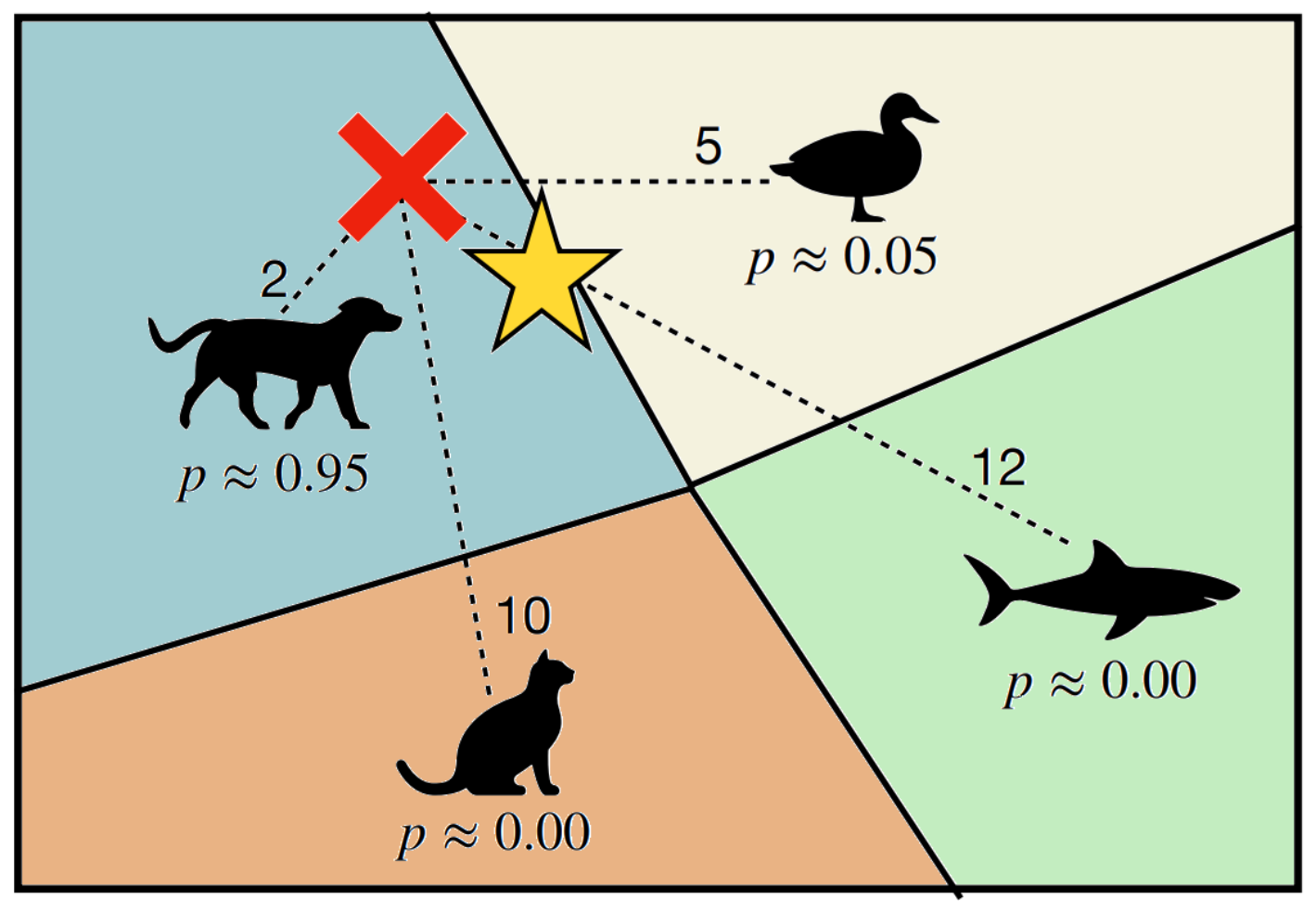
Right for the Right Reasons: Avoiding Reasoning Shortcuts via Prototypical Neurosymbolic AI
NeurIPS
·
2025
·
doi:10.48550/arXiv.2510.25497
Description

Beyond the convexity assumption: Realistic tabular data generation under quantifier-free real linear constraints
ICLR
·
2025
·
doi:10.48550/arXiv.2502.18237
We introduce the Disjunctive Refinement Layer (DRL), a novel layer designed to enforce the alignment of generated data with the background knowledge specified in user-defined constraints. DRL is the first method able to automatically make deep learning models inherently compliant with constraints as expressive as quantifier-free linear formulas, which can define non-convex and even disconnected spaces.
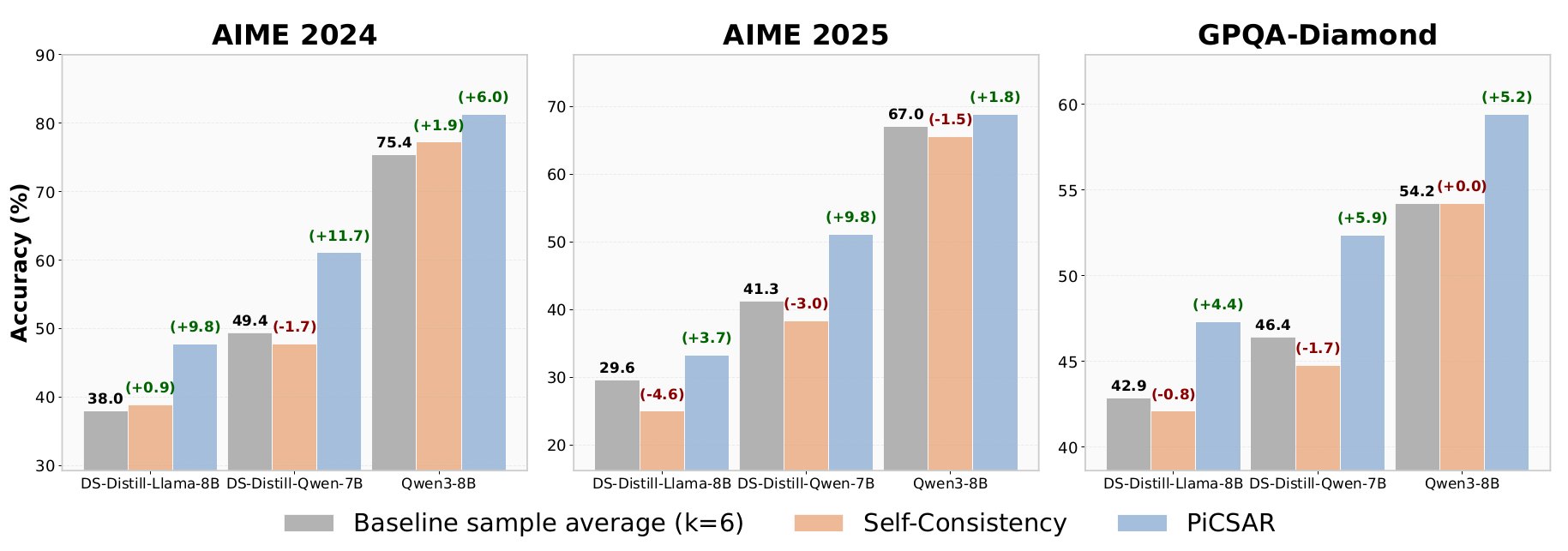
PiCSAR: Probabilistic Confidence Selection And Ranking for Reasoning Chains
preprint
·
2025
·
doi:10.48550/arXiv.2508.21787
Description
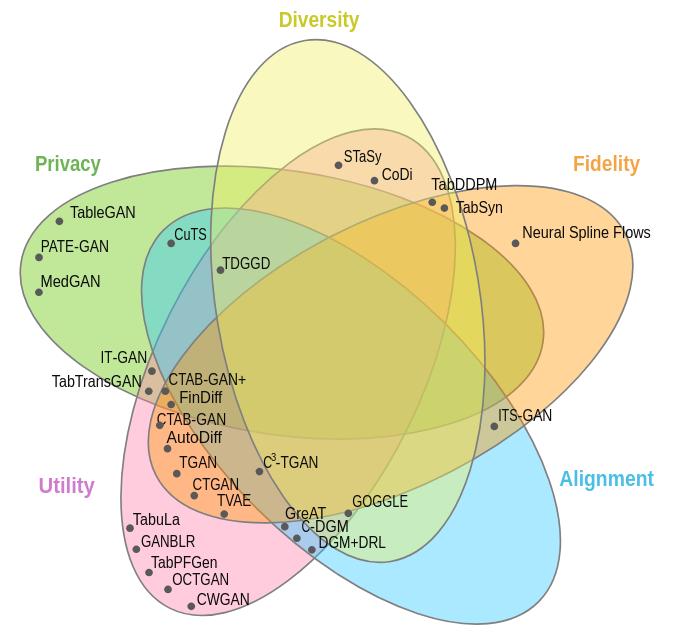
A Survey on Deep Learning Approaches for Tabular Data Generation: Utility, Alignment, Fidelity, Privacy, Diversity, and Beyond
preprint
·
2025
·
doi:10.48550/arXiv.2503.05954
We review deep generative modelling approaches for tabular data from the perspective of four types of requirements: utility of the synthetic data, alignment of the synthetic data with domain-specific knowledge, statistical fidelity of the synthetic data distribution compared to the real data distribution, and privacy-preserving capabilities.
2024
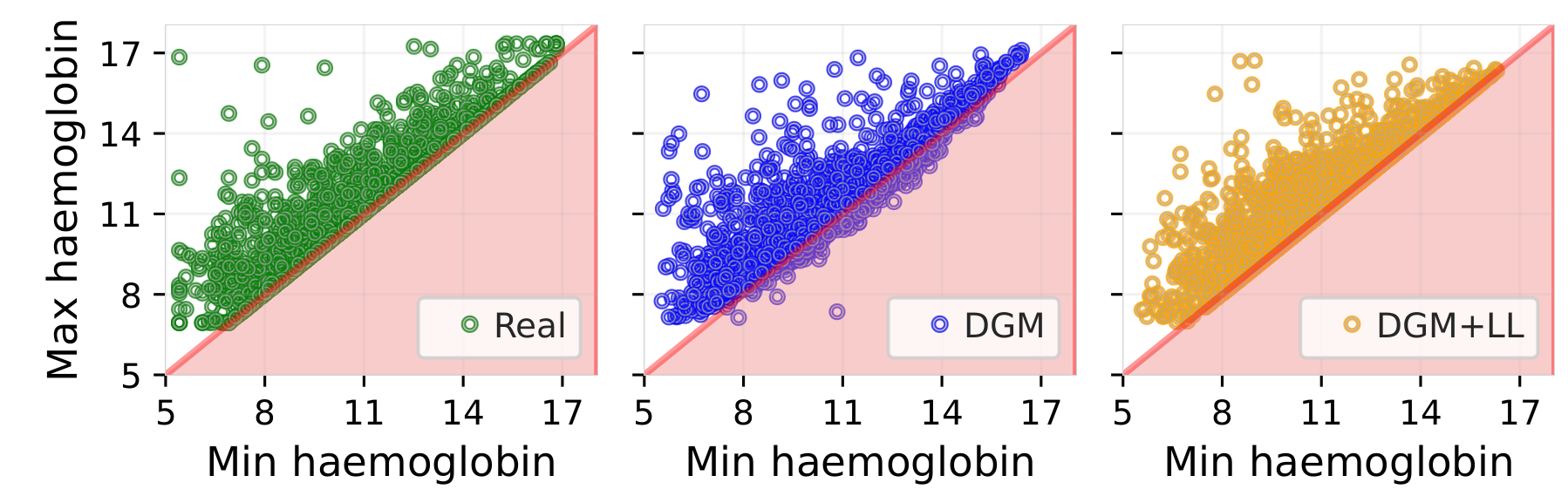
How Realistic Is Your Synthetic Data? Constraining Deep Generative Models for Tabular Data
ICLR
·
2024
·
doi:10.48550/arXiv.2402.04823
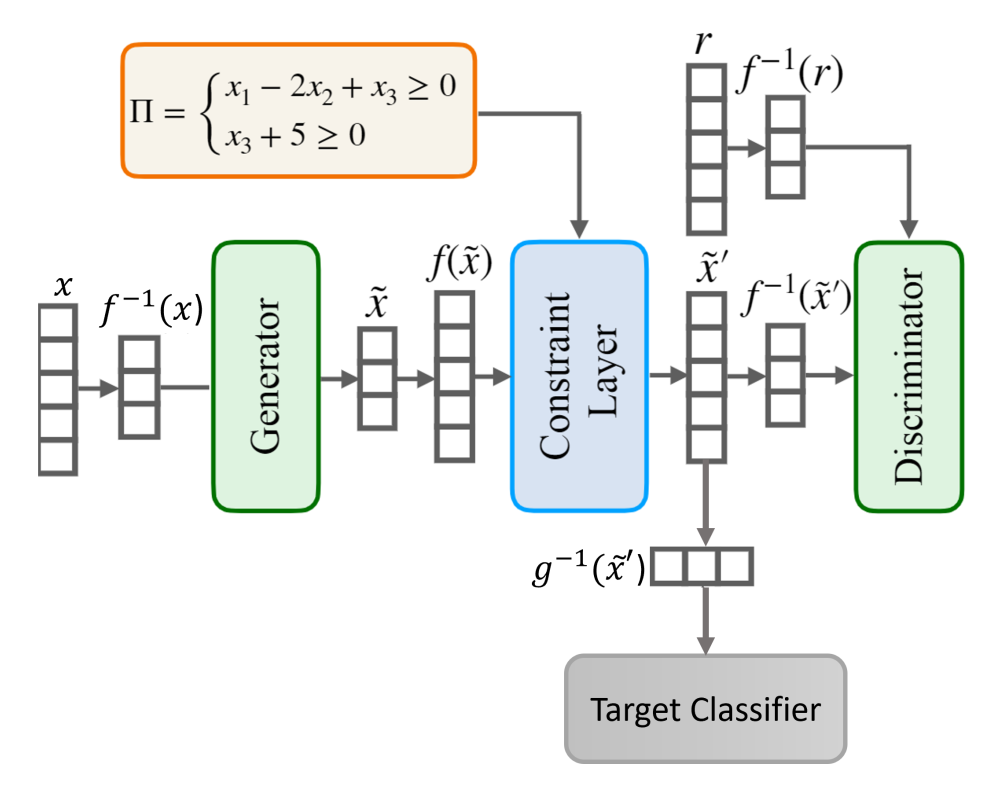
We show how deep generative models for tabular data can be constrained such that their generated samples are guaranteed to be compliant with given constraints. This is achieved by automatically parsing the constraints and transforming them into a Constraint Layer seamlessly integrated with the model.
Deep generative models as an adversarial attack strategy for tabular machine learning
ICMLC
·
2024
·
doi:10.48550/arXiv.2409.12642
We adapt popular tabular deep generative models into adversarial models and evaluate their effectiveness in generating realistic adversarial examples that conform to domain constraints.
PiShield: A PyTorch Package for Learning with Requirements
IJCAI
·
2024
·
doi:10.48550/arXiv.2402.18285
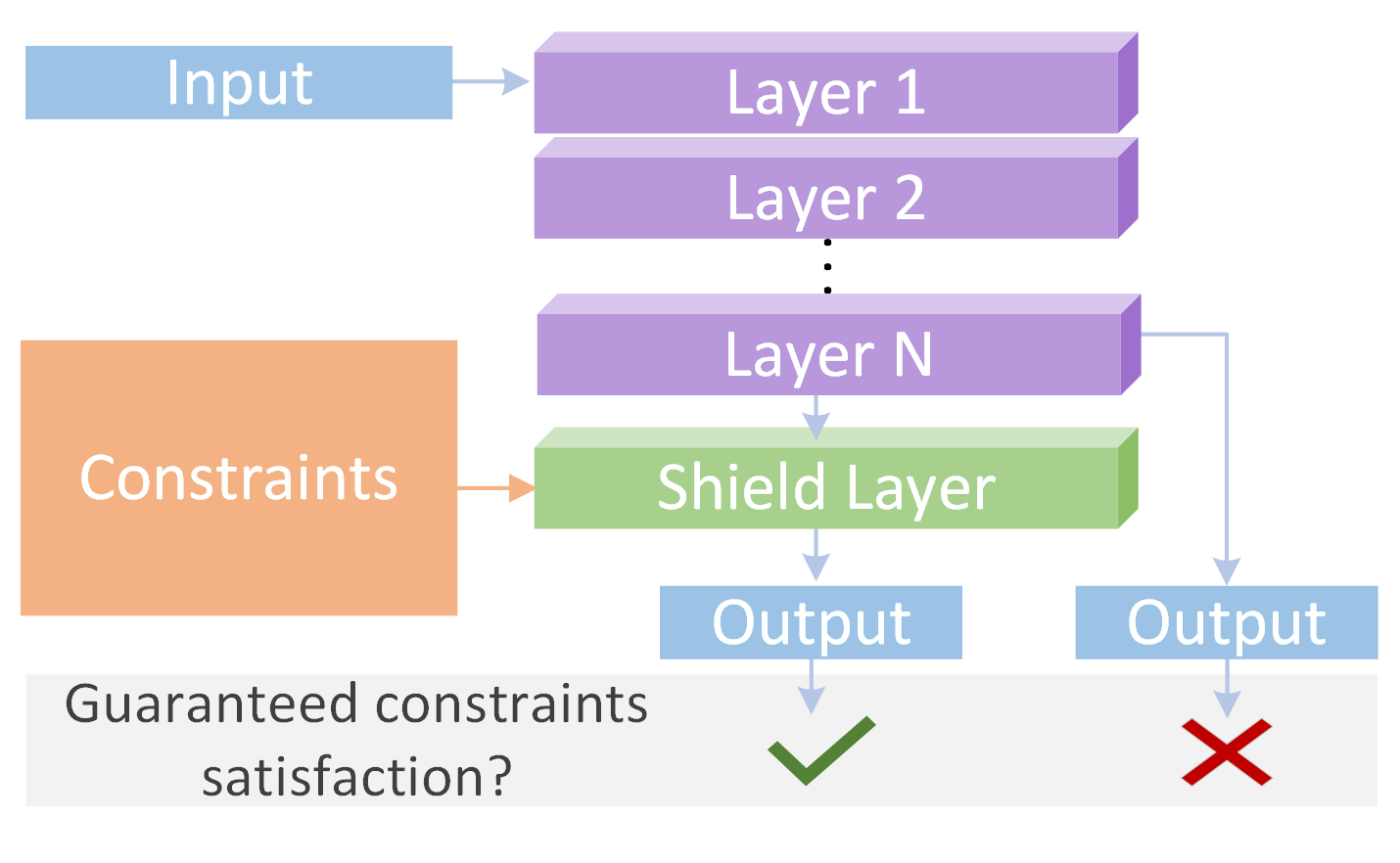
We introduce PiShield, the first package ever allowing for the integration of (propositional or linear) requirements into the neural networks’ topology. PiShield guarantees compliance with these requirements, regardless of input.